
Every day, thousands of Americans walk into government offices, courthouses, and law firms — from the steps of the Lincoln Memorial in Washington, D.C., to the busy streets of downtown Los Angeles — carrying documents they need to submit. Many of those people discover, at the last moment, that their any government forms need notarization. That moment of confusion costs time, money, and frustration.
At Next Generation Notaries, we believe that every American deserves clear, simple guidance on notarization requirements before they reach that critical moment. So, in this guide, we break down exactly which U.S. government forms require notarization, why they require it, and how you can get it done quickly — whether you live near the National Mall or in a small town across the country.
Understanding notarization does not have to feel complicated. In fact, once you learn the basics, the entire process becomes straightforward and stress-free. Let’s dive in.
What Is Notarization and Why Does It Matter?
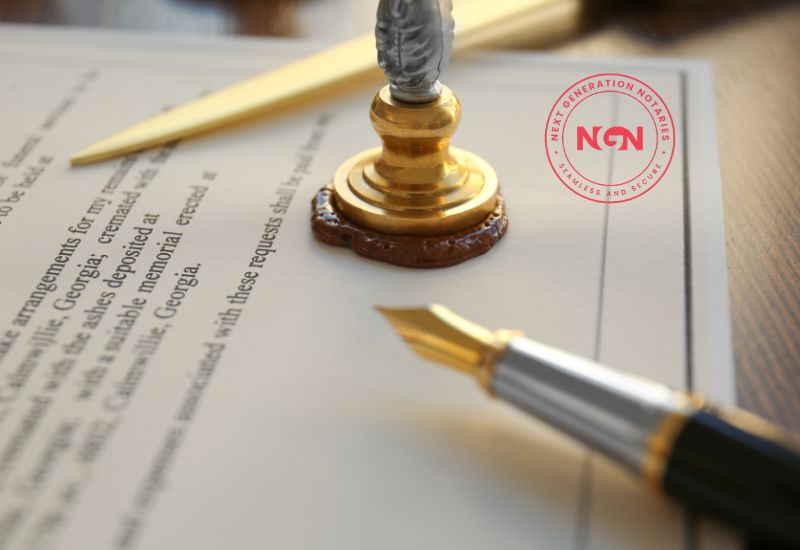
Notarization is the official process by which a licensed notary public verifies the identity of a document signer, witnesses the signing, and stamps or seals the document to confirm its authenticity. The U.S. government — at both the federal and state levels — requires notarization on specific forms to prevent fraud, protect citizens, and ensure legal accountability.
Furthermore, a notarized document carries significant legal weight in courts, government agencies, and financial institutions. Therefore, skipping this step can result in rejected applications, delayed benefits, or even legal complications.
Key Points About Government Forms That Require Notarization
Understanding notarization requirements starts with knowing the essential facts. Here are 10 key points every American should know:
- Not all government forms require notarization — only specific legal and financial documents need a notary’s seal to be valid.
- Identity verification is the primary purpose — notarization confirms that the person signing the document is exactly who they claim to be.
- Power of Attorney (POA) documents almost always require notarization — this applies at the federal, state, and local government level across the country.
- Real estate and property transfer documents require notarization in every U.S. state — no exceptions exist for deeds, mortgages, or title transfers.
- Affidavits submitted to government agencies need notarization — this includes sworn statements for immigration, Social Security, and veterans’ benefits.
- Some states require notarization on voter registration forms — requirements vary by state, so always check your local regulations.
- Wills and trusts may require both notarization and witnesses — requirements differ from state to state, but notarization adds an extra layer of legal protection.
- Passport applications for minors under 16 years old require parental notarized consent in certain circumstances.
- Remote Online Notarization (RON) is now legal in most U.S. states — you can complete many government notarization requirements entirely online.
- A notary public does not verify the content of a document — they only verify the identity of the signer and witness the signing process.
Government Forms That Commonly Require Notarization
1. Power of Attorney (POA) Forms
Power of Attorney is one of the most commonly notarized government-related documents in the United States. When you grant someone the legal authority to act on your behalf — for medical, financial, or legal matters — you must notarize that authorization. Without notarization, the POA is invalid in most states.
Additionally, Durable Power of Attorney forms, which remain effective even when the principal becomes incapacitated, always require notarization.
2. Real Estate and Property Documents
If you buy, sell, or transfer property anywhere in the U.S., your deed, mortgage agreement, or title transfer document requires notarization. For example, if someone purchases a home near Central Park in New York City or a condominium in Miami Beach, the closing process always includes notarized documents.
Real estate transactions represent the single largest category of notarized documents processed annually across the country.
3. Affidavits for Government Agencies
Government agencies — including the Social Security Administration, U.S. Citizenship and Immigration Services (USCIS), and the Department of Veterans Affairs — regularly request notarized affidavits. These sworn statements confirm facts that the agency cannot directly verify.
For instance, USCIS Form I-864 (Affidavit of Support) for immigration petitions requires notarization from the sponsoring U.S. citizen or permanent resident.
4. Parental Consent Forms
When a minor travels internationally without both parents, the traveling parent or guardian must carry a notarized parental consent letter. Schools, sports organizations, and government agencies also often request notarized consent forms for minors.
5. Name Change Petitions
When you petition a court to legally change your name, you must submit notarized affidavits supporting your request. Courts across the country — from the historic courthouses of Boston’s Faneuil Hall district to the courthouses of San Francisco — require these notarized documents as standard procedure.
6. Adoption Documents
Adoption involves extensive paperwork, much of which requires notarization. Both domestic and international adoption processes mandate notarized forms to confirm the identity and consent of biological parents, adoptive parents, and legal representatives.
7. Veterans’ Benefits and Military Forms
The Department of Veterans Affairs requires notarized documents for benefits claims, dependency updates, and certain appeals. Veterans who submit unnotarized forms risk delays in receiving the benefits they have rightfully earned.
8. Business and Tax Documents
Certain IRS and state tax-related affidavits require notarization. Businesses that register with state government agencies — such as LLCs, partnerships, or corporations — often submit notarized articles of organization or incorporation documents.
9. Advance Healthcare Directives (Living Wills)
Advance directives — the legal documents that specify your medical wishes if you become unable to communicate — require notarization in most U.S. states. These forms protect you and guide healthcare providers when you cannot speak for yourself.
10. Financial Account and Bank Authorization Forms
Many government-linked financial processes — such as establishing a trust, filing a bond, or authorizing a representative at a federal agency — require notarized authorization forms to take effect legally.
How We Makes Government Forms Notary Process Easy?

Next Generation Notaries operates with one clear mission: to simplify the notarization process for every American, regardless of location. Whether you need a mobile notary to meet you at your home, a loan signing agent for real estate, or remote online notarization from your laptop, our certified professionals handle every document type with precision and care.
We serve clients across all 50 states and take pride in our fast turnaround, courteous service, and deep knowledge of federal and state-level notarization requirements. Our team stays current with evolving state laws — because notarization requirements change, and you deserve accurate, up-to-date guidance every time.
FAQs: Government Forms Notary
Q1: Do I need notarization for a U.S. passport application?
A: Most standard adult passport applications (Form DS-11 or DS-82) do not require notarization. However, if you are applying for a minor’s passport without one parent present, USCIS and the State Department may require a notarized Form DS-3053 (Statement of Consent). Always confirm requirements at your local passport acceptance facility.
Q2: Where can I find a notary near me for government forms in New York City?
A: In New York City, notary services are available at banks, UPS stores, law offices, and through mobile notary providers. Next Generation Notaries connects you with certified NYC-area notaries who can meet you at your location — whether that’s Midtown Manhattan, Brooklyn, or near iconic landmarks like Rockefeller Center. Remote online notarization is also legal in New York State, so you can get your government forms notarized from home.
Q3: Do Social Security Administration forms require notarization?
A: Some SSA forms — particularly affidavits related to benefits eligibility, representative payee applications, and proof of relationship claims — require notarization. The SSA may accept forms notarized by a commissioned notary public or a U.S. consular officer abroad. Always check the specific form instructions or call your local SSA office to confirm.
Q4: Does a Power of Attorney need to be notarized in Texas?
A: Yes. In Texas, a durable Power of Attorney is legally valid only when signed before a notary public and two witnesses. The Texas Estates Code specifically mandates this requirement. If you live in Houston, Dallas, or anywhere else in the Lone Star State, you must have your POA notarized before submitting it to any government agency, financial institution, or court.
Q5: Can I get government documents notarized online in California?
A: Yes. California passed legislation authorizing Remote Online Notarization (RON) for most document types, including many government forms. An online notary uses audio-visual technology to verify your identity and witness your signature digitally. This is particularly convenient for California residents who cannot travel to a physical notary office.
Q6: Does the IRS require notarized forms?
A: The IRS rarely requires notarized forms for standard tax returns. However, certain power of attorney documents submitted to the IRS — such as Form 2848 (Power of Attorney and Declaration of Representative) — may require authentication, which in some contexts means notarization. Always review the specific form instructions carefully.
Q7: How much does notarization cost for government forms in Florida?
A: Florida law caps notary fees at $10 per notarial act. However, mobile notary services may charge additional travel fees. For Remote Online Notarization in Florida, providers typically charge between $25 and $50 per session. Next Generation Notaries offers transparent, competitive pricing with no hidden fees — whether you are in Miami, Orlando, or Jacksonville.
Q8: Do I need a notary for a will in Illinois?
A: In Illinois, a will does not legally require notarization to be valid. However, Illinois law allows you to create a “self-proved will” by having your will notarized, which simplifies the probate process significantly. The notarized affidavit attached to the will confirms that proper procedures were followed during signing, which courts in Chicago and across Illinois readily accept.
Q9: What is the difference between notarization and apostille for government documents?
A: Notarization verifies the identity of the signer and authenticates the document for domestic use. An apostille, on the other hand, is an additional certification issued by a state authority that makes a notarized document legally valid in foreign countries that participate in the Hague Convention. If you need to submit a U.S. government document abroad — for example, near the U.S. Embassy in London or for immigration in Canada — you typically need both notarization and an apostille.
Q10: Is online notarization valid for USCIS immigration forms?
A: As of the current USCIS policy, many immigration forms and affidavits accept remotely notarized documents as long as they meet state notarization standards. However, USCIS continues to update its guidance. We strongly recommend confirming with a qualified immigration attorney or directly with USCIS before submitting online-notarized immigration documents.
Final Thoughts
Notarization is not bureaucratic red tape — it is a vital safeguard that protects your legal rights, your identity, and your transactions. Whether you are signing a Power of Attorney near the historic Liberty Bell in Philadelphia, purchasing property in Austin, or filing veterans’ benefits in Denver, having the right notarization can make all the difference.
Next Generation Notaries is here to guide you through every step — with knowledgeable professionals, fast service, and a commitment to making government notarization requirements simple, clear, and accessible for every American.
Ready to get your government forms notarized? Contact Next Generation Notaries today and experience notarization the modern way.
Disclaimer: This blog post provides general informational guidance only and does not constitute legal advice. Notarization requirements vary by state and document type. Always consult a qualified attorney or your relevant government agency for guidance specific to your situation.